What the Ground Already Knows

The wall in Sesga is three hundred years old. Up close, the surface isn't smooth, it holds the marks of the hands that packed it, a slight unevenness that a poured concrete wall could never have. When the house was recently restored, nobody tested this wall to see if it still worked. It obviously still worked. The question was only ever whether the people restoring it would trust it enough to build around it rather than replace it.
That's a strange question to have to ask about a material with three centuries of evidence behind it.
The distance between performance and belief explains much of what happened next.
The Sesga restoration sourced the majority of its materials locally, keeping transport energy and construction impact well below what an equivalent industrial rebuild would have produced. Nothing about that finding is surprising on its own. Local materials cut transport emissions almost by definition.
What's more telling is what happens when you look at where these materials keep getting stopped.
Morel et al. (2021), writing in Philosophical Transactions of the Royal Society B, went looking for the real barriers to wider adoption of earth construction and found they were almost never technical. No standards written for the material. No building code that accounts for it. No procurement pathway a contractor can follow without inventing one from scratch.
The material performs. The system around it doesn't.
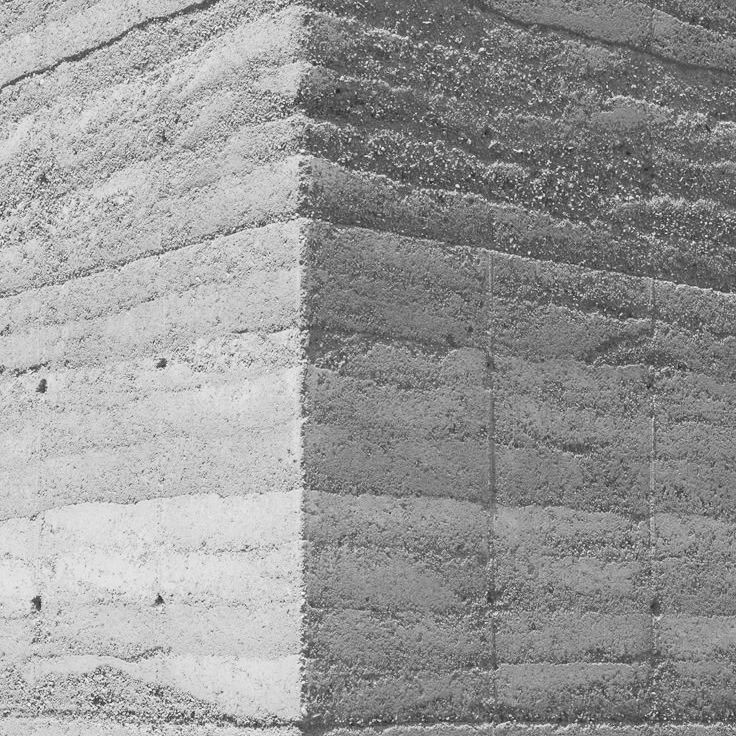
This was never really a story about whether rammed earth works. It's a story about which materials an industry has built the paperwork to trust, and which ones it simply hasn't gotten around to.
Jiang et al. (2023) tested rammed-earth walls in northwest Sichuan through a full summer and winter. The walls held their own, dampening temperature swings and buffering humidity in both seasons, evidence collected in real weather, not a lab. A more recent project, at a campus reception centre in China, used 2,200 cubic meters of rammed earth across sixteen walls, connecting an ancient material to a modern structural frame in a way the Sesga wall never had to attempt.
The material keeps proving itself. The industry keeps needing it proven again.
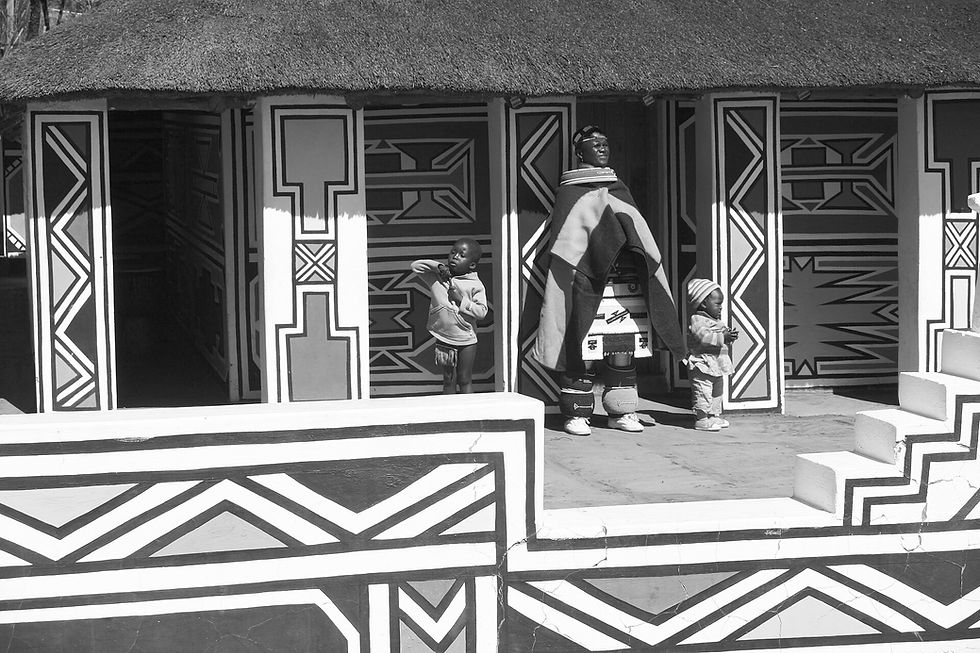
For Africa's built environment, this isn't a story about catching up to somewhere else's revival. Rammed earth, reed, locally fired brick, timber, these were never abandoned here the way they were elsewhere. The global conversation is only now arriving at a starting point much of the continent's building tradition never left.
The ground had already solved this. Architecture was simply late to recognize it.

Comments